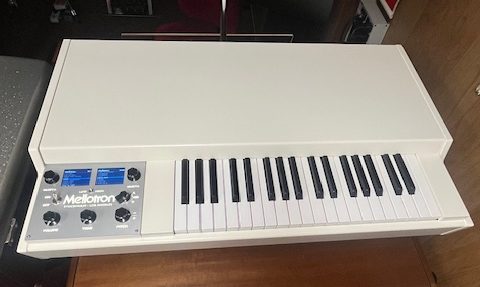

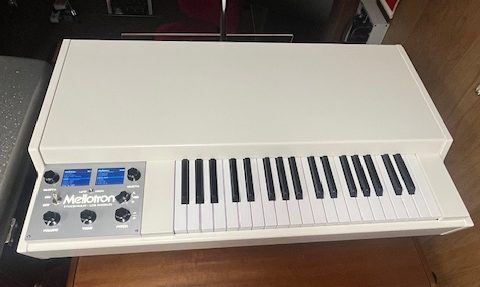
I know what you’re thinking. Really! This isn’t a vintage instrument. I really hesitated in buying it – for that very reason. But in many ways, the modern digital version is superior to the original. Consider the situation:
I was NEVER going to be the owner of a vintage, analog Mellotron. Reason #1: Price. In the US, the earliest Mellotrons, in heavy wooden cabinets designed for home use (the Mark I and Mark II models) are rare. The most popular Mellotron model, the smaller, white polished M400, was used by many rock bands on stage, but they are still very difficult to find, and the asking prices are often in the $8,000 to $12,000 range.
The original Mellotrons, which played back tape recordings of various instruments, voices and sound effects, were unreliable even when they were new. Today, after decades of abuse, many of them are beat-up, and in miserable condition, and play quite poorly. Finding parts – or a qualified tech to work on these complex instruments – can be a huge challenge.
The M400s came with a large tape frame that included just three sounds. So an owner might have been able to play the classic 3 Violins tapes, and perhaps a flute and brass tape. That’s it, unless they owned and stored other tape frames, and installed them in the machine as they wanted to use them. And by now, many of the tapes are worn out, and don’t sound like they originally did.
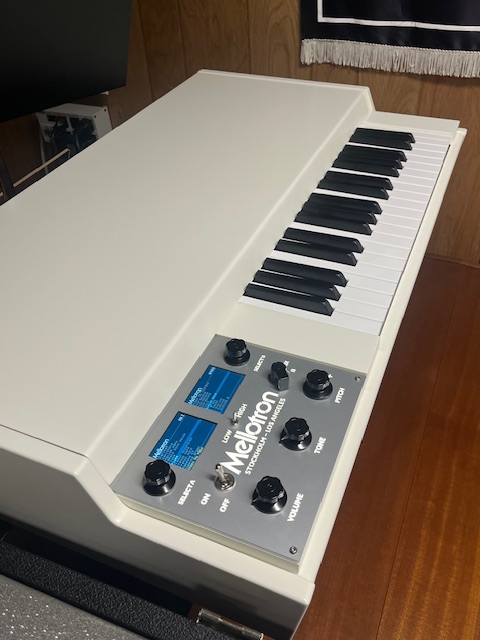

My Mellotron M4000D, designed to look like an M400 without its base cabinet, came with 100 sounds to choose from, and I can switch between them instantly. The sounds are from the original master tapes of the Mellotron and its similar predecessor tape-replay instrument, the US-made Chamberlin. The sounds are uncompressed. And if that’s not enough sounds, you can buy hundreds of more original Mellotron/Chamberlin sounds on expansion cards offered by the manufacturer, and you can even have sounds from other tape-replay machines of the era, the Optigan and the Orchestron.

The digital recordings have all the endearing quirks of the original tapes. You can hear instruments and voices that are slightly off-pitch. The sounds of passing traffic, and people dropping things, or dragging chairs in the recording studio. In ensemble recordings, sometimes the players’ timing with each other is off significantly. You can hear the characteristic fluttery pitches that resulted because the playback motors were often not playing at a constant speed. If you hold a chord, one key might exhaust its recording and go silent after seven seconds, while another key might have another second or two of recording on it. And like the original instruments, the digital machines have that haunting, mystical quality that was used to such great advantage by groups like The Moody Blues, The Beatles, King Crimson, David Bowie and so many others.

The M4000D, hand-built in Sweden by the company of Mellotron aficionado Markus Resch, comes in three models: The small Micro (with fewer keys, but with an octave switch), the Mini model (with a Fatar keybed), and the full-sized M4000D, which comes in a beautifully finished, wood cabinet. (The other models have metal cabinets.) I opted for the full-sized model, which has long, real-wood keys that re-create the feel of playing a real M400. I love its look, finish, and the buttery feel of the keyboard. It’s as close as you can get to the vintage Mellotron experience in a more reliable and versatile instrument.
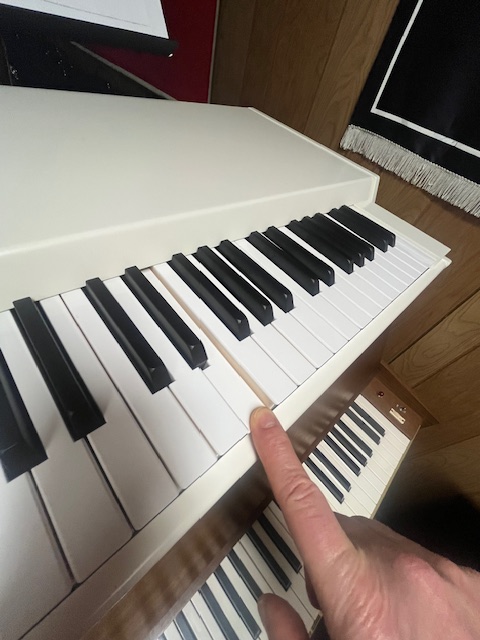

The digital Mellotrons can be played like the originals, or you can take advantage of additional features that have been built into them. For example, you can mix two instruments’ sounds in any proportion that you choose. (On the original M400, players found they could put the tape track selector between two instruments and get a mix of sounds, but the fidelity was poor because the edges of the tapes were being played. If a singer whose recording on key E3 comes out slightly off-pitch before he hits his note, you can edit out the beginning of that recording. You can decide how much motor flutter to add, so it can sound like a well-maintained instrument or a road warrior. It has MIDI capability, and I love linking it to my synths so that I can add ‘Tron sounds to those synths.
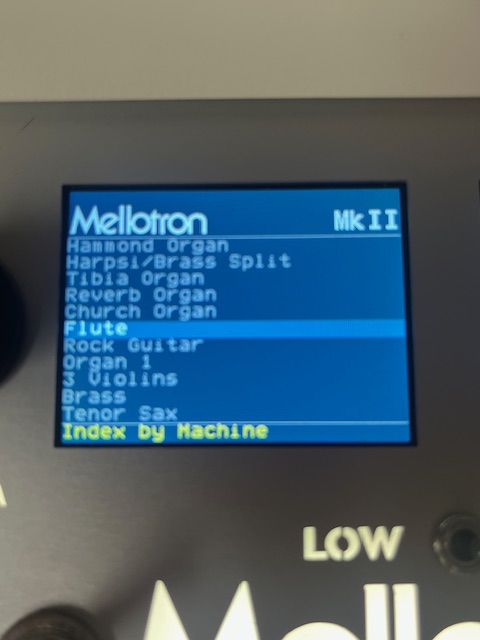

It has jacks for headphones, a sustain pedal and a volume pedal. The controls on the front panel allow you to set the volume, tone and alter the pitch. A display allows you to select from all the available sounds, arranged in alphabetical order, by type of instrument (arranged by the various models of Mellotrons and Chamberlins the tapes were originally used on), or by instrument category (all the string sounds, all the brass sounds, etc.)
You can also create playlists, so that you have quick access to your favorite sounds without scrolling through a long list of sounds, or to group sounds in the order in which you’ll use them in a performance. If you get deep into its menus, you can set key parameters, such as attack and release time, or set it it play the key louder if you depress the key further. You can enter a setting that simulates playing with older tapes.
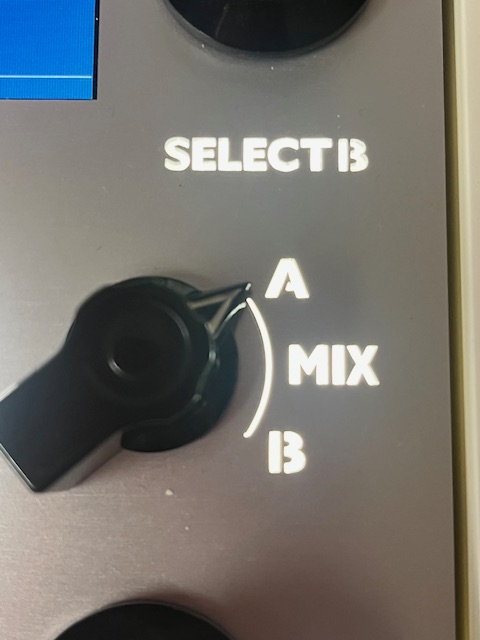
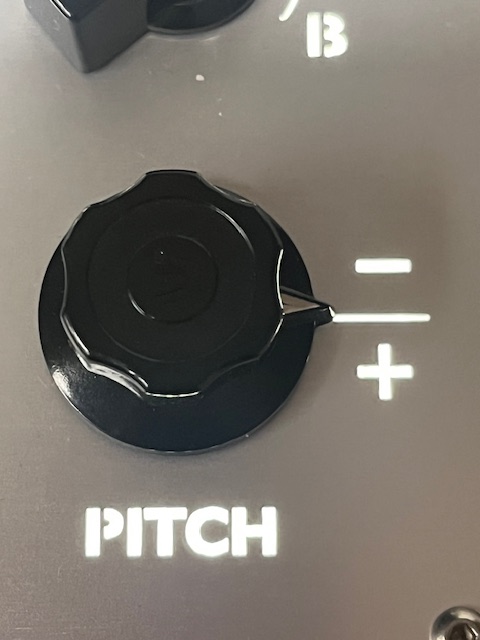
The possibilities are more or less endless. Or you can do what I have chosen to do – just use it with the factory’s default options. Markus has made great choices. Just play the thing! It sounds fabulous!
 Alan's growing vintage keyboard collection